



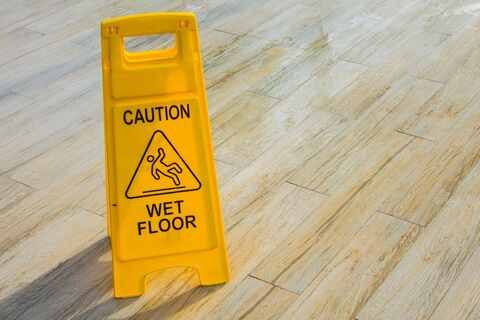
A wet floor in a produce aisle takes half a second to end with a broken wrist or a back injury. What happens next depends on a Florida statute most shoppers have never heard of.
The Notice Rule That Decides These Cases
Florida Statute 768.0755 governs slip and falls on “transitory foreign substances” in a business. In plain English: spills, dropped grapes, leaking freezer cases, tracked-in rainwater. To win, an injured shopper must prove the store had actual or constructive knowledge of the hazard and failed to fix it.
Actual knowledge means an employee saw the spill or caused it.
Constructive knowledge means the store should have known. You can prove it two ways: the condition existed long enough that a reasonably careful store would have found it, or the condition happened with such regularity that it was foreseeable. A freezer case that has leaked every week for a month is a textbook example.
Why Evidence Disappears Fast
Grocery stores overwrite surveillance footage on short cycles, sometimes within days. Sweep logs and inspection records establish exactly when an employee last checked the aisle, and those records answer the “how long was it there” question that decides constructive knowledge. An attorney can send a preservation letter within days of the fall demanding the store retain footage, logs, and incident reports. Wait a month and the footage is usually gone.
What to Do After a Grocery Store Fall
- Report it before you leave. Ask for a manager and make sure an incident report gets written. Get a copy or at least the report number.
- Photograph everything. The substance, the aisle, your shoes, any warning cones (or their absence).
- Get witness names. Other shoppers leave and become unfindable.
- See a doctor the same day. Gaps in treatment become the insurer’s favorite argument.
- Do not give a recorded statement to the store’s insurance company before speaking with an attorney.
What Compensation Covers
A successful premises liability claim can recover medical bills, future treatment, lost wages, reduced earning capacity, and pain and suffering. Falls that sound minor often are not; wrist fractures, torn rotator cuffs, and herniated discs are common and expensive.
Comparative Fault: Expect the Store to Blame You
Florida applies modified comparative negligence. If a jury finds you more than 50 percent at fault, you recover nothing, and the store’s insurer knows it. Expect arguments that you were looking at your phone or ignored a cone. Strong evidence beats these arguments; that is why the first hour after the fall matters so much.
Injured in a Florida Grocery Store? Get Help Today
Dante Law Firm has handled injury claims involving major Florida grocery chains and knows how these insurers defend them. We fight for maximum compensation so you win, and you pay nothing unless we recover. Call (954) 365-0000 for a free consultation.

 (954) 365-0000
 Call Us Today - It's Free!